

Industrial facility architecture is undergoing an aggressive transformation. In our decades of operating as a premier global LED lighting manufacturer, we have seen facility managers, procurement officers, and electrical contractors make the same fundamental mistake: selecting commercial lighting or outdated low-efficacy systems to do a heavy industrial job.
When we engineered our flagship line of solid-state linear illumination, we did not set out to build another generic strip run. We engineered a solution to eliminate high operational overhead, systemic fixture degradation, and unsafe lux drops across high-bay applications.
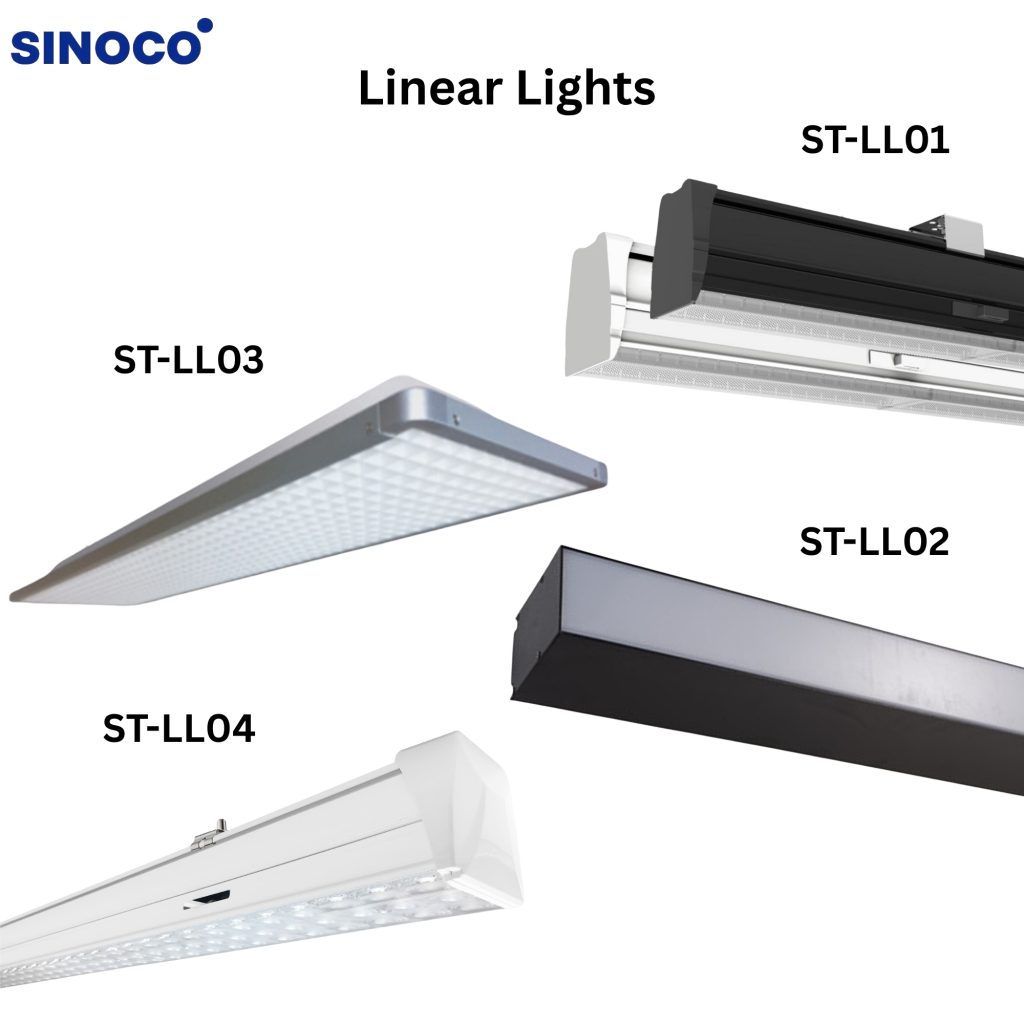
High-Efficacy 210 lm/W Industrial Linear LED Lighting: The Ultimate Engineering & Procurement Guide
This guide is an exhaustive, ground-up technical breakdown of what makes High-Efficacy 210 lm/W Industrial Linear LED setups the gold standard for global manufacturing plants, logistic warehouses, chemical processing facilities, and smart hubs. Below, we provide the raw engineering equations, optical physics, and complete real-world deployment data for our exact ST-LL product lineup (ST-LL01 to ST-LL04) so you can make an airtight procurement decision.
1. The Engineering Physics of 210 lm/W Luminous Efficacy
Luminous efficacy (eta) is not a marketing phrase; it is a strict thermodynamic variable measuring the structural efficiency of a fixture converting electrical power into visible light.
eta = Phi/P
Where Phi represents the total luminous flux output in lumens and P represents the net power consumption in watts. When we entered the heavy industrial development phase, standard market linear lights were capped between 120 lm/W and 140 lm/W. The remaining energy was lost completely as residual heat, accelerating driver degradation and causing significant light decay.
By optimizing the physical junction layout of our semiconductor chips, pairing them with ultra-pure aluminum substrates, and utilizing industry-leading drivers, we achieved a sustained engineering output of 210 lm/W to 220 lm/W.
The Real-World Total Cost of Ownership (TCO) Shift
To see the concrete impact of this technological evolution, let’s look at a typical retrofit profile for a 20,000-square-meter logistics hub utilizing 500 industrial continuous-run fixtures operating 16 hours a day over a standard 5-year accounting lifecycle.
| Technical Performance Metric | Legacy Competitor Linear System | Sinoco ST-LL Industrial Series |
| Target System Lumens Per Unit | 20,000 lm | 20,000 lm |
| Measured System Efficacy | 130 lm/W | 210 lm/W |
| Real Power Consumption Per Unit | 153.8 W | 95.2 W |
| Total Energy Demanded (500 Units) | 76,900 W (76.9 kW) | 47,600 W (47.6 kW) |
| Annual Power Consumption (5,840 Hrs) | 449,096 kWh | 278,016 kWh |
| 5-Year Operational Cost (@ $0.12/kWh) | $269,457 | $166,809 |
| Net Operational Capital Saved | Baseline | $102,648 Saved Automatically |
By deploying our high-efficacy architecture, we do not just reduce energy load; we alter the financial line-items of your operational budget. The capital recovery timeline for a complete facility transition to our systems consistently tracks under 14 months.
2. Exhaustive Technical Profile: The Sinoco ST-LL Product Lineup
We recognize that no two industrial applications share identical environmental stressors. A semiconductor assembly line demands entirely different optical distributions than a municipal water treatment facility or a sawdust-heavy furniture manufacturing plant.
To resolve this, we engineered four distinct structural variations within our flagship series, each retaining our baseline 210 lm/W efficacy architecture.
ST-LL01: The Heavy Industrial Workhorse

We built the ST-LL01 for high-ceiling industrial sectors prone to continuous kinetic vibration, physical debris impact, and particulate accumulation.
- Design Philosophy: Traditional cooling fins act as dust traps, which insulate fixtures and trap destructive heat. We shaped the ST-LL01 with an aerodynamic, smooth exterior profile that prevents airborne dust, wood fibers, or concrete particulates from settling on the chassis.
- Optical Assembly: We chose a 96% optical transmittance borosilicate glass lens system rather than polycarbonate alternatives. This ensures the face will not cloud, yellow, or become microscopically pitted over decades of chemical or abrasive exposure.
ST-LL02: The Architectural Linear Powerhouse
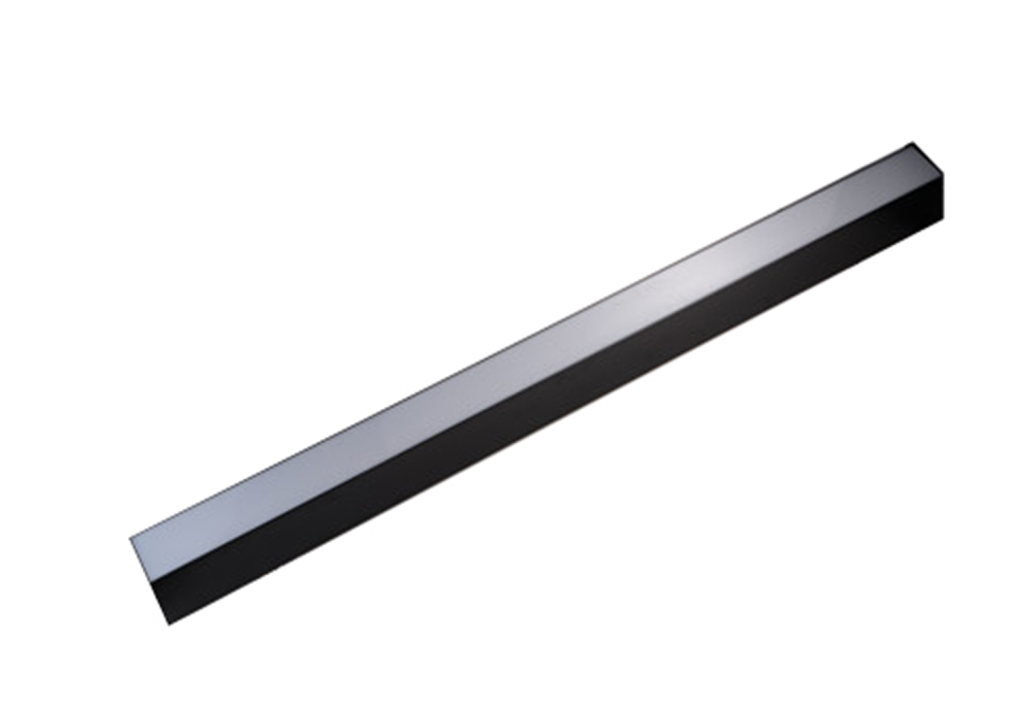
For large commercial showrooms, open distribution spaces, hypermarkets, and modern corporate complexes, structural aesthetics matter alongside raw power. The ST-LL02 brings extreme efficacy down into a sleek profile.
- Continuous Run Architecture: The ST-LL02 features our proprietary tongue-and-groove internal interlocking system. This engineering allows contractors to link modules together flawlessly to form absolute “lines of light” exceeding 50 continuous meters without a single physical break or dark spot.
- Glare Mitigation: This model is designed with a deeply recessed micro-prismatic diffuser array, bringing the Unified Glare Rating (UGR) strictly below 19 to keep workers focused and free from eye strain.
ST-LL03: The Extreme Tri-Proof Environment Specialist
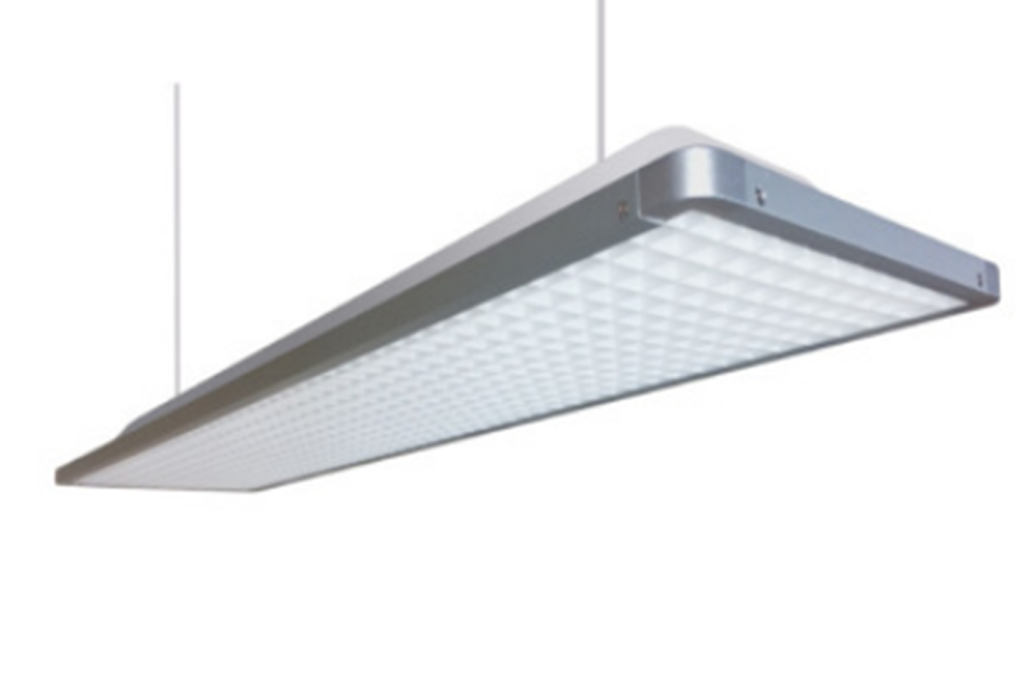
When we developed the ST-LL03, our engineering team focused completely on aggressive environmental elements. This is our specialized tri-proof (waterproof, dustproof, and corrosion-proof) champion.
- Material Integrity: The outer shell is forged from an advanced, non-corrosive technopolymer composite alongside heavily anodized structural alloys. It resists airborne salinity, direct chemical washdowns, and ambient ammonia gases common in agricultural facilities.
- Thermal Resiliency: Engineered with a specialized low-temperature internal driver matrix, the ST-LL03 operates safely down to -40°C, making it the absolute choice for heavy cold-storage infrastructure and food processing facilities.
ST-LL04: The Intelligent IoT Smart City & Building Node
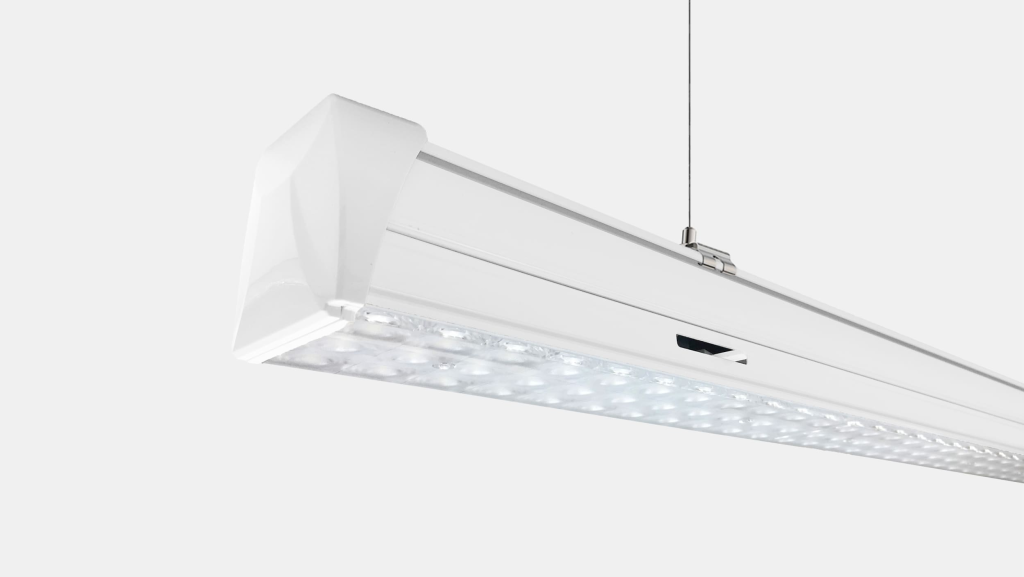
Industrial facilities can no longer afford isolated, non-communicative electronics. The ST-LL04 serves as the digital backbone of modern smart factory ecosystems.
- Zhaga Book 18 Integration: We integrated standardized Zhaga Book 18 sockets natively into the ST-LL04 architecture. This allows for zero-rewiring, plug-and-play field upgrades of smart controllers, light sensors, or mesh nodes.
- Protocol Flexibility: Out of the box, our drivers interface seamlessly with DALI-2, LoRaWAN, and Zigbee corporate control systems. This allows for multi-zone occupancy dimming and autonomous daylight harvesting, driving down real-world operational costs an additional 30% beyond the baseline efficiency shift.
3. Advanced Optical Engineering: The Asymmetric “Bat-Wing” Light Distribution
Most competitors distribute light through basic 120^circ symmetric symmetric diffusers. In a narrow aisle warehouse or factory assembly bay, this results in high-intensity central hot spots directly beneath the light, while vertical shelving units and perimeter workspaces remain locked in deep shadows.
We solved this optical bottleneck through our custom-molded, high-purity optical lens arrays that shape the light into a precise asymmetric bat-wing distribution pattern.
This specialized distribution projects high-intensity rays outwards at wide lateral angles rather than directing all energy straight down.
Why this benefits your facility floor layout:
- Extended Fixture Pitch: Because the light spreads wide horizontally, we can increase the layout pitch distance between linear units to 3–5 meters without suffering any center lux drops. You purchase fewer total units to illuminate the exact same square footage.
- Unrivaled Light Uniformity (U_o): We consistently maintain a Uniformity Ratio (U_o \ge 0.7) across raw working floors. Uniform lighting removes high-contrast shadows, significantly dropping worker error rates and boosting safety across high-risk machinery areas.
4. Survivability Metrics: 20kV Surge Protection & Heavy Industrial Testing
An industrial light is only as valuable as its ability to survive power grid fluctuations and extreme physical stress. If a lighting array fails during an electrical storm or high-frequency line switching event, your factory stops. We built our systems to completely withstand these industrial realities.
Overcoming Industrial Grid Fluctuations
Industrial environments experience continuous voltage spikes caused by heavy inductive loads—such as large motors, welding banks, and compressors—switching on and off. While standard commercial linear fixtures include basic 4kV to 6kV surge suppression, we integrate an advanced 20kV surge protection device (SPD) directly into the input power terminal of every single fixture. This sacrificial protective circuit actively catches electrical anomalies, saving the core driver components and maintaining constant operation.
Mechanical Integrity Ratings
- IP66 & IP69K Ingress Protection: Our mechanical sealing gaskets are pressure-vulcanized to ensure absolute immunity against high-velocity, high-temperature water jet cleanings and total micro-dust isolation.
- IK10 Mechanical Impact Armor: The structural frame of our linear line is tested to withstand a direct 20-joule kinetic impact energy, confirming that overhead debris or material handling accidents will not compromise internal electrical safety.
- 100,000-Hour True Operational Lifespan: Backed by real-world thermodynamic laboratory verification, our systems retain L_70 status at 100,000 hours, removing the high overhead of continuous component replacement programs.
5. Architectural Guide: Mount Types and Structural Installation
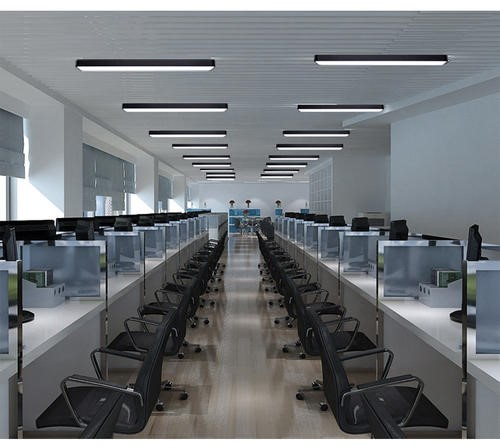
We understand that field flexibility dictates installation costs. Therefore, we designed our entire high-efficacy linear suite to adapt natively to any structural configuration on-site.
       [Suspended Aircraft Cable]               [Surface Mount Brackets]
                 |                                        |
      =======================                  =======================
      ||   ST-LL Fixture   ||                  ||   ST-LL Fixture   ||
      =======================                  =======================
A. Suspended Aircraft Cable Installation
Perfect for high-ceiling manufacturing spaces and deep warehouse aisles. We include adjustable, high-tensile stainless steel aircraft cables that link directly to the integrated chassis anchor eyes. This allows installers to quickly level long linear runs over specific machinery paths.
B. Rigid Surface Mounting
For low-bay structures, subterranean utility chambers, and structural concrete ceilings, we provide heavy-duty 304 stainless steel click-fit brackets. These brackets fasten directly to the overhead surface, allowing the fixture body to snap firmly into place in under ten seconds.
C. Continuous Trunking Rail Systems
Our modular models feature an internal through-wiring channel framework. Contractors pull primary power leads straight through the fixture body, using internal connection blocks to bridge units back-to-back. This slashes field wiring labor bills by up to 60%.
6. Definitive Frequently Asked Questions (FAQ)
How does Sinoco maintain a true 210 lm/W when competitors drop to 140 lm/W?
We achieve this through massive investments in raw material engineering. We run top-tier, oversized semiconductor dies driven at optimal thermal sweet spots, combined with patented phase-change aluminum core substrates that pull heat rapidly away from the chip junction. By lowering internal heat development, we reduce structural impedance and unlock maximum luminous efficiency.
What is your warranty framework and structural support program?
We stand completely behind our engineering with a comprehensive, transparent 5-year global product warranty. Because we manage our own manufacturing lines, we carry full replacement component reserves, processing warranty requests through our engineering offices inside of 48 hours.
Can these fixtures safely handle sub-zero cold storage facilities?
Absolutely. Our ST-LL03 models are built from the ground up with specialized low-temperature solid-state components. Unlike standard systems that face driver cracking or startup delays in deep freezes, our lights thrive down to -40°C, delivering instant-on maximum lux output.
Do you provide independent lighting layout planning before we buy?
Yes. Our global engineering department provides complete, complimentary DIALux simulation reports for your specific real estate footprints. Simply send over your facility CAD files, and we will deliver a full lux mapping report, showing exact fixture positioning, expected floor lux values, and calculated uniformity levels before you purchase anything.
7. The Procurement Conclusion: Transition to High-Efficacy Leadership
Choosing your primary industrial lighting platform is a long-term operational decision that directly impacts facility safety, regulatory compliance, and your bottom line for the next decade. Relying on legacy, high-energy fixtures is an ongoing financial drain.
At Sinoco, we don’t just assemble parts; we engineer world-class industrial lighting assets. Our High-Efficacy 210 lm/W Industrial Linear LED arrays deliver verified data, unyielding build quality, and unmatched real-world performance.
Let us optimize your facility. Contact our engineering group today to get your custom DIALux simulation layout and see exactly how much energy, capital, and maintenance overhead we can save for your operation.